
Can I use my super to build a house?

If you’ve been trying to achieve the great Australian Dream of home ownership but are struggling to build a sizeable deposit, there are some alternative ways to do it. If you’ve ever wondered whether you can leverage your retirement savings for something other than retiring, you’ll be happy to know you can now use your superannuation to build a house.

Here’s what you need to know to build a new home or buy house and land using your super – plus the potential pros and cons to consider.

Ways to build or buy property using your superannuation

You don’t need to be in your golden years to enjoy all the wealth you’ve accumulated in your superannuation account. On the contrary, the Australian government has made it easier than ever to put those before-tax contributions to good use in a number of different ways.

1.     First Home Super Saver (FHSS) Scheme

The First Home Super Saver (FHSS) Scheme allows eligible Australians to make voluntary contributions into their super to save for their first home. You can then apply to release these contributions, along with other earning, for your home deposit, provided you meet the eligibility criteria.

As with all government schemes, there are limits to the amount you can contribute and withdraw under the FHSS. That’s why you’ll need to stay across the latest guidelines from the Australian Tax Office (ATO), as well as speak to a financial advisor or tax agent to ensure any decisions you make are compliant under the scheme.

How does the First Home Super Saver Scheme work?

·       Voluntary contributions: If you are eligible, you can made additional voluntary contributions to your super fund, which are then earmarked under the FHSS scheme. These contributions can be salary sacrifice contributions or personal after-tax contributions for which a tax deduction is claimed.

·       Contribution limits: There are annual and total limits on the contributions you can make under this Scheme. For the 2024-25 financial year, for example, the maximum contributions allowed are $15,000 per financial year and $50,000 in total.

·       Request for release: Once you’ve made the contributions, you can apply to release these funds along with any other associated earnings to help fund your first home.

·       Eligibility criteria: To be eligible, you need to meet certain criteria, including being 18 years or older, never having owned a property in Australia and intending to live in the property as soon as possible.

·       Tax benefits: Contributions made under the FHSS scheme receive concessional tax treatment within your super fund. When released, the taxable portion is subject to a lower rate compared to your marginal tax rate.

·       Withdrawal process: After applying for a release, the ATO determines the amount that can be released and will instruct your super fund to make the payment. You will then need to sing a contract to begin the buying or building process within 12 months.

2.    You’ve reached preservation age

Are you a retiree looking to downsize into a brand new home in your dream location? You’re in luck!

Once you have reached what’s known as ‘preservation age’, you can access your superannuation for any reason. For most people, that means you’re in your 60s and retired, or after you turn 67 – even if you are still working.

With the funds you’ve accumulated in your super over decades of working, you can pour everything into finding the perfect plot of land and building the home of your dreams.

5 Benefits of accessing your super to build a house

1.      Access to helpful schemes: You can now access your super to build a house thanks to the FHSS scheme, which may also come with tax advantages and help you save for your first home.

2.      Tax benefits: Contributions made under the FHSS are taxed at a lower rate, which translates to potential tax savings compared to standard super contributions.

3.      Become a homeowner faster: Using your super can speed up your journey to homeownership, especially for first-time buyers.

4.      Personalise your dream home: Building a home rather than buying an existing property means you can customise your home to meet your lifestyle needs and tastes.

5.      Start building a portfolio: Directing your super toward property investment will diversify your portfolio and finally put you on the property ladder – with the potential for a long-term capital growth and financial security ahead.

3 potential negatives of using super to build a house

1.      Less for your retirement savings: Drawing from your super to build a house can dimmish your retirement savings. This may impact the overall nest egg you are planning to rely on during retirement.

2.      Impact on compound growth: The compounding effect of superannuation can be huge over several decades. Early withdrawals may interrupt this compounding growth and limit your potential wealth at retirement.

3.      Strict eligibility: Accessing your super to build a house involves meeting strict eligibility criteria.

Bring your dream home to life


Start making your super work for you – even before you hit retirement age – by using it to fund your dream new home. When you build with any home builder part of the NEX Building Group you will have exclusive access to MyChoice Home Loans. Our team will put you in the best lending position when we call on our relationships with some of Australia’s leading lenders. Why not use our borrowing capacity calculator to understand exactly where you are on the journey towards homeownership.  
7 tips for buying your first investment property

Buying an investment property can be a lucrative business, allowing you to generate decent cash flow when done right. However, there can be a lot to consider, especially if it’s your first investment property. Similar to buying your first home, it’s worth sitting down and figuring out your options before you jump into buying your first investment property. Here are the factors, and some challenges you should consider before you jump into the world of investment properties.

1.    Consider if you’re ready to be a property manager

There’s a lot more to being a landlord than taking your tenants rent every month. In fact, it can be a rather challenging job, requiring you to choose the right property, find reliable tenants, and keep up with the general wear and tear of the property.

It’s worth being handy on the tools, but if this isn’t an expertise of yours than you may consider hiring a property manager to handle those tasks for you. However, keep in mind that this will dip into your profits and should be factored in as another expense on top of buying your investment property.

2.    Understand cash flow

This is a very important for any investment property. Cash flow refers to the money that flows to and from your investment property. Whilst you will receive cash flow weekly when your tenants pay their rent, this cash will then flow out in order to pay things such as mortgage repayments, maintenance costs, rates, utilities, and strata or body corporate fees.

Speaking to our mortgage brokers at MyChoice Home Loans can be one of the smartest decisions you’ll make, as they can help you understand if you have the right budget for such a big investment. It is common over the first few years to experience a loss, especially if the rental income on the property is not enough to cover the mortgage and its running costs. It can take time to break even and then make a profit on an investment property, which is why it’s so important to understand cash flow.

3.    Secure an investment loan

Similar to what you may have experienced when you purchased your first home, your first investment property will generally require a loan to secure the property. Investment properties may require a larger deposit than owner-occupied properties and may have tighter approval requirements. Typically, you will need a 20% deposit to purchase an investment property and successfully take out an investment loan.

Chat to your local MyChoice Home Loans consultant in order to get the most out of your investment, making sure your investment loan works hard for you. Using our MATCH system, we can help you gain access to an array of lenders who will be able to help find the right loans for you.

4.    To build, or to buy?

Tossing up whether to build or buy your first investment property? The biggest difference will be the wait on rental income and cash flow. The sooner you can secure tenants for your property, the sooner you can start enjoying your investment income. It’s worth noting a brand new home not only meet all the modern-day requirements for your tenants, it may help to secure a higher weekly return.

5.    Focus on location

Where you choose to purchase or build your first investment property depends on the tenants you wish to target. For instance, young singles may want an apartment close to restaurants, retail facilities and night life, whereas families will want homes closer to great education precincts, parks and public transport facilities. Additionally, you may also wish to look at suburbs tipped for growth.

6.    Look for low maintenance property

You don’t want to be spending every weekend making repairs at your rental property, and to be fair your tenants probably don’t want you there every weekend either! This is why it’s important to consider a low maintenance property when buying your first investment property. A new home is ideal for investors, as an older property may require a lot of maintenance and will depreciation will reduce your profits.

7.    Consider the tenant

By considering the needs and wants of your tenants, you’ll be poised to make a savvy decision when it comes to choosing your first investment property. Whist tenants don’t typically get emotionally attached to a place they won’t be living in forever, they still appreciate a good kitchen and a nice bathroom, and air conditioning too!

Parking is also an important thing to consider. Look for new-home builds that offer two or more car spaces and wider streets for extra parking.


If you’re interested in securing your first investment property, contact your local MyChoice Home Loans consultant and book in for your obligation free financial review, and find out how we can secure you an investment property loan, your way. 

Switching Home Loans Made Easy.

There are many reasons you may be looking to refinance your home loan – maybe you’re coming off a fixed rate, looking to consolidate debts or need more flexibility in your loan. Whatever your motive, here’s what our expert consultants suggest considering before taking the plunge.

1.       What is it going to cost you?

Make sure you have clear understanding of the terms and conditions of your existing loan and the loan you’re looking to refinance to. This will allow you to factor in any fees that may come with the change, such as discharge fees, valuation fees and break costs.

If you’re not sure what terms and conditions apply to you, chat to your experienced MyChoice Home Loans consultant.

2.       What loan features would you like?

When refinancing make sure you consider the features you would like included in the home loan, such as a redraw facility or an offset account to help you pay down the loan quicker.

Your home loan consultant will help secure a home loan that is benefits your unique circumstances, whilst ensuring you benefit from the best deal available.  

3.       What are the term conditions?

Keep in mind that the home loan you are refinancing to may offer a lower interest rate but can add on another 15-30 years to pay off, ultimately increasing in the interest you’ll pay over the life of the loan.

4.       How flexible is the loan?

Make sure you discuss with your MyChoice Home Loans consultant if the new home loan you wish to apply for offers any relief or concessions, such as circumstances where the lender can provide financial relief support of your repayments if an eligible borrower, spouse, or dependant passes away or is medically certified with a terminal illness.

At MyChoice Home Loans we make refinancing your home loan easy, making the transition between loans stress free by using our relationships with some of Australia’s leading lenders to secure the best home loan tailored to meet your needs as they are today.


Optimise your home finances with a Refinance Home Loan from MyChoice Home Loans. Enquire now to talk to one of our consultants. 

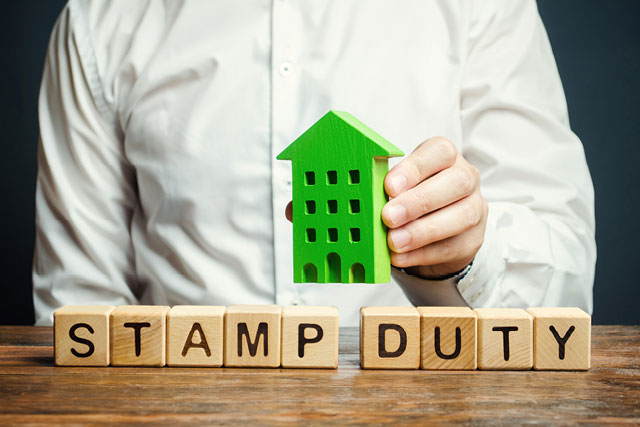
Understanding Stamp Duty.

If you’re looking to buy a home, you’ve probably heard the word “stamp duty” thrown around a few times. But what is it?

To put it simply, stamp duty is a tax paid when buying a house. The exact amount depends on which state or territory you live in, the price of the property you’re buying plus, any exemptions that might apply to your situation.

On average, Australian’s pay tens of thousands of dollars in stamp duty, on top of the mortgage, deposit and other expenses that come along with buying a house.

So, let’s break it down state by state.

New South Wales:

Stamp duty is payable in NSW when you buy a home including:

·         Your first home

·         An investment property

·         A holiday home

·         A farming property

However, if you are a first home buyer, you may be entitled to a concessional rate or even an exemption from paying stamp duty under the First Home Buyers Assistance Scheme (FHBAS)*. This applies to:

·         Buying an existing home

·         Buying a new home

·         Vacant land on which you intend to build a home

Buying off-the-plan which you plan to use as a main residence? You maybe be able to defer your stamp duty payment for up to 12-months after you sign the agreement, or until the property is completed or handed over, whichever comes first.

Learn more about stamp duty in NSW.

Calculate the stamp duty you will pay on a block of land for your McDonald Jones Homes or MOJO Homes build.

Victoria:

Staying consistent with NSW if you purchase a first home, investment property, holiday home or farming property you are required to pay stamp duty.

Victoria offers a number of exemptions including many aimed at first home buyers. If you fall into this category, you may be entitled to a concessional rate or an exemption*.

Discover more about stamp duty in Victoria.

Calculate the stamp duty you will pay on a block of land for your Arden Homes build.

South Australia:

The South Australian Government recently announced that first home buyers may be eligible for stamp duty relief on their new home purchase.

·         Stamp duty is reduced to zero if your new home is below $650,000 or $400,000 for vacant land.

·         Stamp duty is partially reduced if your new home is below $700,000 or $450,000 for vacant land.

There is also relief for those who lost their homes in the recent Murray Riverlands region floods.

If your existing principal place of residence was destroyed or substantially damaged in the recent floors and you are looking to purchase or re-build a replacement home constructed within 3 years from date of purchase, you can receive relief up to $48,830 in stamp duty.

Find out more about stamp duty in South Australia.

Calculate the stamp duty you will pay on a block of land for your Akora Homes or Weeks Homes build.

Queensland:

Stamp duty in Queensland is applicable to the same dwellings as the previously mentioned states and offers a home or vacant land concession to first home buyers.

·         Home Concession: Your first home concession only applies to a home valued under $550,000 and can save you up to $15,925.

·         Vacant Land Concession: The first home vacant land concession only applies to vacant land valued under $400,000 and you can save up to $7,175.

Learn more about stamp duty in Queensland.

Calculate how much stamp duty you will have to pay on a block of land for your Brighton Homes build.

To learn how much stamp duty, you could expect to pay on your new home purchase or vacant land purchase use our Stamp Duty calculator.

All you have to do is enter your details and our calculator will automatically break down the government fees that you are required to pay.

Chat with your local MyChoice Home Loans consultant about available home loan options for you. 

*Terms & Conditions apply. Head to your appropriate states’ website for further details.

Pay off your home loan sooner.

Becoming mortgage-free is the ultimate goal. There are so many benefits to achieving this, largely the financial freedom that comes with being relieved of one of the biggest debts possibly in your lifetime.

We’ve compiled a list of ways you can help pay off your home loan faster.

1.     Secure a lower interest rate.

Many Australia’s may question if this is even possible these days; however, the good news is you can!

By locking in a more competitive interest rate, this can save you thousands of dollars. By paying less in interest you may be able to increase the amount you pay towards your principal loan.

Our expert mortgage consultants will do the hard work for you. We can call on our relationships with some of Australia’s leading lenders to negotiate an interest rate that works best for you.

To discover how much you could save with a lower interest rate using our mortgage
repayments calculator.

2.     Make more frequent or extra repayments.

It sounds obvious, but making more frequent or extra repayments is a simple way to pay off your home loan sooner.

Have you recently received a pay rise, or maybe you’ve started a side hustle as a way to bring in an additional income? Did you receive a tax refund, or inheritance? Consider putting this additional money towards your mortgage.

Plus, did you know by making fortnightly repayments rather than monthly, you can end up making an extra month’s home loan repayment every year! Now that’s what we call a fun fact!

3.     Create an offset account.

An offset account is like an everyday bank account linked to your home loan balance. Fully transactional and allows you to withdraw funds for your day-to-day expenses.

You can deposit your salary and savings into the account and the balance is then offset against the amount owing on your home loan, reducing the interest on your home loan.

For example, if you have a loan of $550,000 and $30,000 in your offset account; in this situation, you’ll only be charged interest of a loan balance of $520,000.

As the interest charged on your monthly repayments is cut down, you could find yourself with extra money to put towards your repayments and help you reduce your loan quicker.

4.     Refinance your home loan.

We highly recommend looking at refinancing every few years, whilst you may not actually need to refinance your home loan, you will have peace of mind knowing that your interest rate is still competitive.

Our mortgage consultants can also check that you aren’t paying for any features you don’t need and not over-paying in fees and charges. 


Chat with your local MyChoice Home Loans consultant about a FREE home loan review.

Enquire

Please fill in your details below and a MyChoice representative will be contact.